

Dosya:Invisible X-rays Messier 49.jpg - Vikipedi
İçeriğe atla
Ana menü
Gezinti
  • Anasayfa
  • Hakkımızda
  • İçindekiler
  • Rastgele madde
  • Seçkin içerik
  • Yakınımdakiler
Katılım
  • Deneme tahtası
  • Köy çeşmesi
  • Son değişiklikler
  • Dosya yükle
  • Topluluk portalı
  • Wikimedia dükkânı
  • Yardım
  • Özel sayfalar
Vikipedi Özgür Ansiklopedi
Ara
  • Bağış yapın
  • Hesap oluştur
  • Oturum aç
  • Bağış yapın
  • Hesap oluştur
  • Oturum aç

Dosya:Invisible X-rays Messier 49.jpg
Sayfa içeriği diğer dillerde desteklenmemektedir.
  • Dosya
  • Tartışma
  • Oku
  • Wikimedia Commons üzerinde gör
  • Yerel açıklama ekle
  • Yerel açıklama kaynağı ekle
Araçlar
Eylemler
  • Oku
  • Wikimedia Commons üzerinde gör
  • Yerel açıklama ekle
  • Yerel açıklama kaynağı ekle
Genel
  • Sayfaya bağlantılar
  • Basılmaya uygun görünüm
  • Sayfa bilgisi
  • Kısaltılmış URL'yi al
  • Karekodu indir
Diğer projelerde
Görünüm
Vikipedi, özgür ansiklopedi
  • Dosya
  • Dosya geçmişi
  • Dosya kullanımı
  • Küresel dosya kullanımı
  • Üstveri
Dosya:Invisible X-rays Messier 49.jpg
Bu önizlemenin boyutu: 724 × 600 piksel. Diğer çözünürlükler: 290 × 240 piksel | 579 × 480 piksel | 927 × 768 piksel | 1.236 × 1.024 piksel | 2.472 × 2.048 piksel | 3.725 × 3.086 piksel.
Tam çözünürlük ((3.725 × 3.086 piksel, dosya boyutu: 1,75 MB, MIME tipi: image/jpeg))
Bu dosya Wikimedia Commons'ta bulunmaktadır. Dosyanın açıklaması aşağıda gösterilmiştir.
Commons, serbest/özgür telifli medya dosyalarının bulundurulduğu depodur. Siz de yardım edebilirsiniz.
Bu dosya Wikimedia Commons'ta bulunmaktadır.

Özet

AçıklamaInvisible X-rays Messier 49.jpg
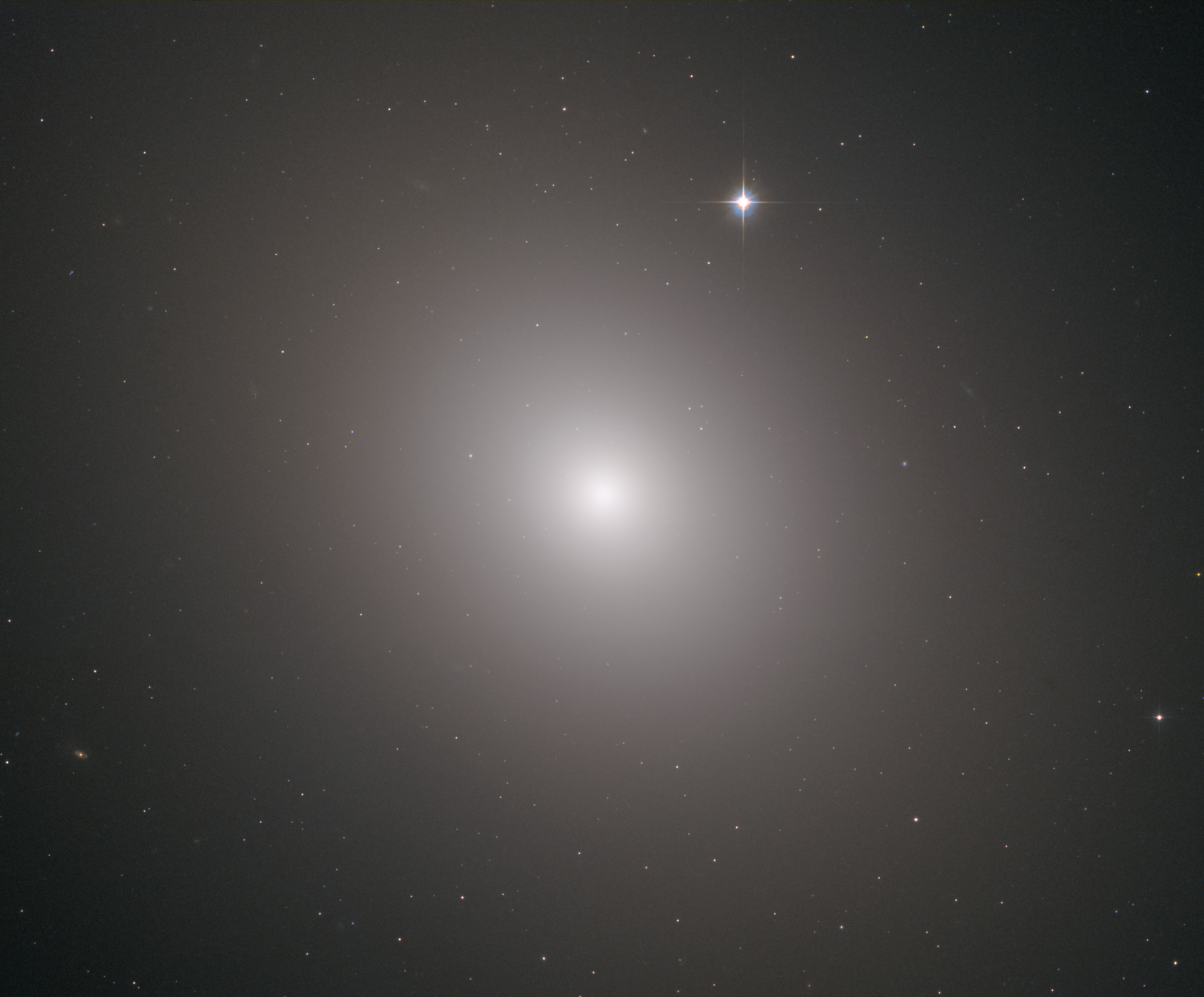
English: This fuzzy orb of light is a giant elliptical galaxy filled with an incredible 200 billion stars. Unlike spiral galaxies, which have a well-defined structure and boast picturesque spiral arms, elliptical galaxies appear fairly smooth and featureless. This is likely why this galaxy, named Messier 49, was discovered by French astronomer Charles Messier in 1771. At a distance of 56 million light-years, and measuring 157 000 light-years across, M49 was the first member of the Virgo Cluster of galaxies to be discovered, and it is more luminous than any other galaxy at its distance or nearer.

Elliptical galaxies tend to contain a larger portion of older stars than spiral galaxies and also lack young blue stars. Messier 49 itself is very yellow, which indicates that the stars within it are mostly older and redder than the Sun. In fact, the last major episode of star formation was about six billion years ago — before the Sun was even born!

Messier 49 is also rich in globular clusters; it hosts about 6000, a number that dwarfs the 150 found in and around the Milky Way. On average, these clusters are 10 billion years old. Messier 49 is also known to host a supermassive black hole at its centre with the mass of more than 500 million Suns, identifiable by the X-rays pouring out from the heart of the galaxy (as this Hubble image comprises infrared observations, these X-rays are not visible here).
Tarih 18 Mart 2019, 06:00:00
Kaynak https://www.spacetelescope.org/images/potw1911a/
Yazar ESA/Hubble & NASA, J. Blakenslee, P Cote et al.

Lisanslama


atıf
atıf
ESA/Hubble images, videos and web texts are released by the ESA under the Creative Commons Attribution 4.0 International license and may on a non-exclusive basis be reproduced without fee provided they are clearly and visibly credited. Detailed conditions are below; see the ESA copyright statement for full information. For images created by NASA or on the hubblesite.org website, or for ESA/Hubble images on the esahubble.org site before 2009, use the {{PD-Hubble}} tag.
Conditions:
  • The full image or footage credit must be presented in a clear and readable manner to all users, with the wording unaltered (for example: "ESA/Hubble"). Web texts should be credited to ESA/Hubble (except when used by media). The credit should not be hidden or disassociated from the image footage. Links should be active if the credit is online. See the usage rights Q&A section on the ESA copyright page for guidance.
  • ESA/Hubble materials may not be used to state or imply the endorsement by ESA/Hubble or any ESA/Hubble employee of a commercial product or service.
  • ESA/Hubble requests a copy of the product sent to them to be indexed in their archive.
  • If an image shows an identifiable person, using that image for commercial purposes may infringe that person's right of privacy, and separate permission should be obtained from the individual.
  • If images or visuals are changed significantly from the original work (apart from resizing, cropping), we suggest that the changes are mentioned after the credit line. For example "Original image by ESA/Hubble (M. Kornmesser), warping and recolouring by NN".

Notes:

  • Note that this general permission does not extend to the use of ESA/Hubble's logo, which shall remain protected and may not be used or reproduced without prior and individual written consent of ESA/Hubble.
  • Also note that music, scientific papers and code on the esahubble.org site are not released under this license and can not be used for non-ESA/Hubble products.
  • By reproducing ESA/Hubble material, in part or in full, the user acknowledges the terms on which such use is permitted.
w:tr:Creative Commons
atıf
Bu dosya Creative Commons Atıf 4.0 Uluslararası lisansı altında lisanslanmıştır.
Atıf:
ESA/Hubble
Şu seçeneklerde özgürsünüz:
  • paylaşım – eser paylaşımı, dağıtımı ve iletimi
  • içeriği değiştirip uyarlama – eser adaptasyonu
Aşağıdaki koşullar geçerli olacaktır:
  • atıf – Esere yazar veya lisans sahibi tarafından belirtilen (ancak sizi ya da eseri kullanımınızı desteklediklerini ileri sürmeyecek bir) şekilde atıfta bulunmalısınız.
https://creativecommons.org/licenses/by/4.0CC BY 4.0 Creative Commons Attribution 4.0 truetrue

Altyazılar

Bu dosyanın temsil ettiği şeyin tek satırlık açıklamasını ekleyin.

Bu dosyada gösterilen öğeler

betimlenen

telif hakkı durumu

telif hakkı alınmış

telif hakkı lisansı

Creative Commons Atıf 4.0 Uluslararası

kuruluşu

18 Mart 2019

ortam türü

image/jpeg

Dosya geçmişi

Dosyanın herhangi bir zamandaki hâli için ilgili tarih/saat kısmına tıklayın.

Tarih/SaatKüçük resimBoyutlarKullanıcıYorum
güncel08.13, 18 Mart 201908.13, 18 Mart 2019 tarihindeki sürümün küçültülmüş hâli3.725 × 3.086 (1,75 MB)JmencisomUser created page with UploadWizard

Dosya kullanımı

Bu görüntü dosyasına bağlantısı olan sayfalar:

  • Messier 49

Küresel dosya kullanımı

Aşağıdaki diğer vikiler bu dosyayı kullanmaktadır:

  • bs.wikipedia.org üzerinde kullanımı
    • Messier 49
  • de.wikipedia.org üzerinde kullanımı
    • Messier 49
  • en.wikipedia.org üzerinde kullanımı
    • List of galaxies by surface brightness
  • et.wikipedia.org üzerinde kullanımı
    • Messier 49
  • fr.wikipedia.org üzerinde kullanımı
    • M49 (galaxie)
  • ml.wikipedia.org üzerinde kullanımı
    • മെസ്സിയർ 49

Üstveri

Bu dosyada, muhtemelen fotoğraf makinesi ya da tarayıcı tarafından eklenmiş ek bilgiler mevcuttur. Eğer dosyada sonradan değişiklik yapıldıysa, bazı bilgiler yeni değişikliğe göre eski kalmış olabilir.

Katkı/SağlayıcıESA/Hubble & NASA, J. Blakenslee, P Cote et al.
KaynakESA/Hubble
Kısa başlık
  • Invisible X-rays
Resim başlığı
  • This fuzzy orb of light is a giant elliptical galaxy filled with an incredible 200 billion stars. Unlike spiral galaxies, which have a well-defined structure and boast picturesque spiral arms, elliptical galaxies appear fairly smooth and featureless. This is likely why this galaxy, named Messier 49, was discovered by French astronomer Charles Messier in 1771. At a distance of 56 million light-years, and measuring 157 000 light-years across, M49 was the first member of the Virgo Cluster of galaxies to be discovered, and it is more luminous than any other galaxy at its distance or nearer. Elliptical galaxies tend to contain a larger portion of older stars than spiral galaxies and also lack young blue stars. Messier 49 itself is very yellow, which indicates that the stars within it are mostly older and redder than the Sun. In fact, the last major episode of star formation was about six billion years ago — before the Sun was even born! Messier 49 is also rich in globular clusters; it hosts about 6000, a number that dwarfs the 150 found in and around the Milky Way. On average, these clusters are 10 billion years old. Messier 49 is also known to host a supermassive black hole at its centre with the mass of more than 500 million Suns, identifiable by the X-rays pouring out from the heart of the galaxy (as this Hubble image comprises infrared observations, these X-rays are not visible here).
Kullanım şartları
  • Creative Commons Attribution 4.0 International License
Verinin ilk yaratılma zamanı06.00, 18 Mart 2019
Kullanılan yazılımAdobe Photoshop CC 2018 (Windows)
Dosya değişiklik tarihi ve zamanı09.27, 17 Aralık 2018
Dijitalleştirme zamanı21.10, 2 Mayıs 2018
Üst veri son değişim tarihi10.27, 17 Aralık 2018
Özgün belgenin benzersiz kimliğixmp.did:e532b001-10c0-0a47-afb6-f31ce890b766
Anahtar kelimelerMessier 49
İletişim bilgileri

http://www.spacetelescope.org

Karl-Schwarzschild-Strasse 2

Garching bei München, None, D-85748 Germany

IIM sürümü4
"https://tr.wikipedia.org/wiki/Dosya:Invisible_X-rays_Messier_49.jpg" sayfasından alınmıştır
  • Gizlilik politikası
  • Vikipedi hakkında
  • Sorumluluk reddi
  • Davranış Kuralları
  • Geliştiriciler
  • İstatistikler
  • Çerez politikası
  • Mobil görünüm
  • Wikimedia Foundation
  • Powered by MediaWiki
Dosya:Invisible X-rays Messier 49.jpg
Konu ekle