Dosya:Globular Cluster M10.jpg - Vikipedi
İçeriğe atla
Ana menü
Gezinti
  • Anasayfa
  • Hakkımızda
  • İçindekiler
  • Rastgele madde
  • Seçkin içerik
  • Yakınımdakiler
Katılım
  • Deneme tahtası
  • Köy çeşmesi
  • Son değişiklikler
  • Dosya yükle
  • Topluluk portalı
  • Wikimedia dükkânı
  • Yardım
  • Özel sayfalar
Vikipedi Özgür Ansiklopedi
Ara
  • Bağış yapın
  • Hesap oluştur
  • Oturum aç
  • Bağış yapın
  • Hesap oluştur
  • Oturum aç

Dosya:Globular Cluster M10.jpg
Sayfa içeriği diğer dillerde desteklenmemektedir.
  • Dosya
  • Tartışma
  • Oku
  • Wikimedia Commons üzerinde gör
  • Yerel açıklama ekle
  • Yerel açıklama kaynağı ekle
Araçlar
Eylemler
  • Oku
  • Wikimedia Commons üzerinde gör
  • Yerel açıklama ekle
  • Yerel açıklama kaynağı ekle
Genel
  • Sayfaya bağlantılar
  • Basılmaya uygun görünüm
  • Sayfa bilgisi
  • Kısaltılmış URL'yi al
  • Karekodu indir
Diğer projelerde
Görünüm
Vikipedi, özgür ansiklopedi
  • Dosya
  • Dosya geçmişi
  • Dosya kullanımı
  • Küresel dosya kullanımı
  • Üstveri
Dosya:Globular Cluster M10.jpg
Bu önizlemenin boyutu: 600 × 600 piksel. Diğer çözünürlükler: 240 × 240 piksel | 480 × 480 piksel | 768 × 768 piksel | 1.024 × 1.024 piksel | 2.048 × 2.048 piksel | 4.059 × 4.059 piksel.
Tam çözünürlük ((4.059 × 4.059 piksel, dosya boyutu: 13,26 MB, MIME tipi: image/jpeg))
Bu dosya Wikimedia Commons'ta bulunmaktadır. Dosyanın açıklaması aşağıda gösterilmiştir.
Commons, serbest/özgür telifli medya dosyalarının bulundurulduğu depodur. Siz de yardım edebilirsiniz.
Bu dosya Wikimedia Commons'ta bulunmaktadır.

Özet

AçıklamaGlobular Cluster M10.jpg
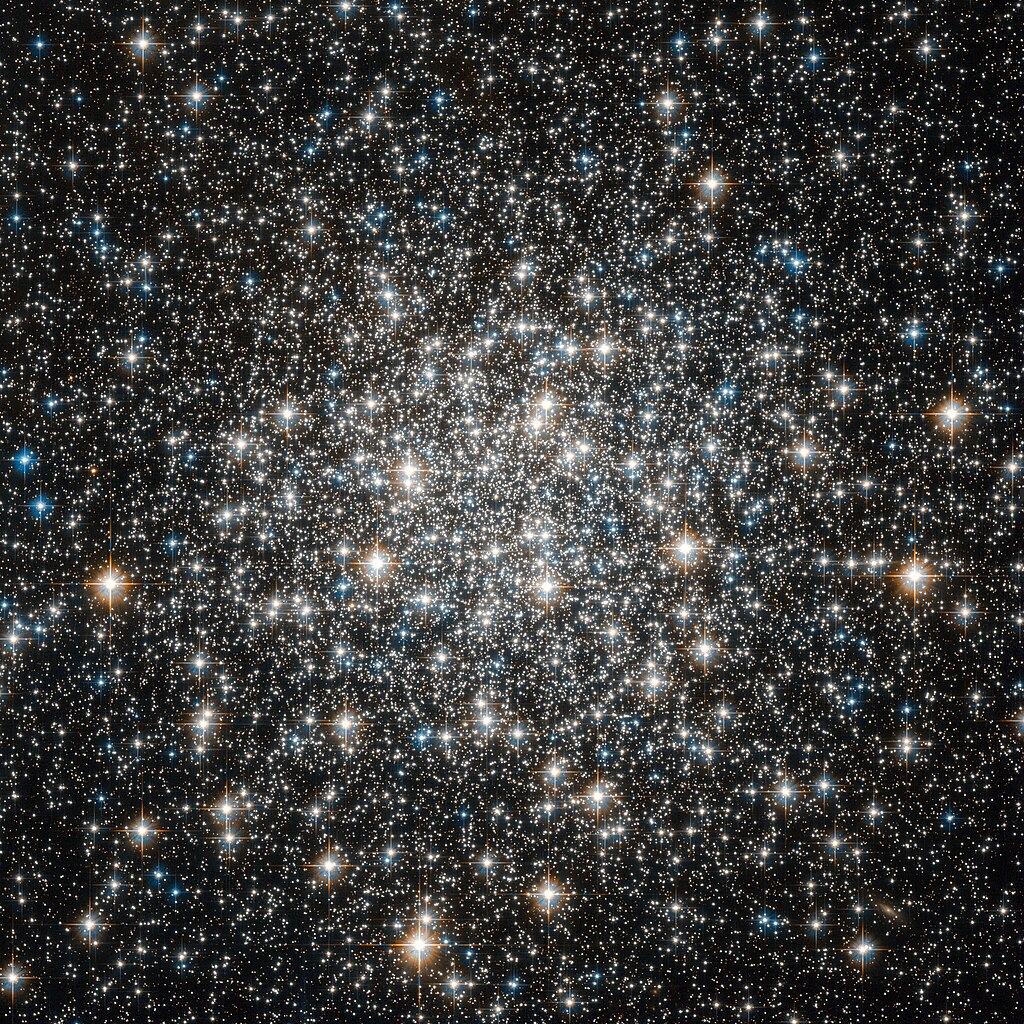
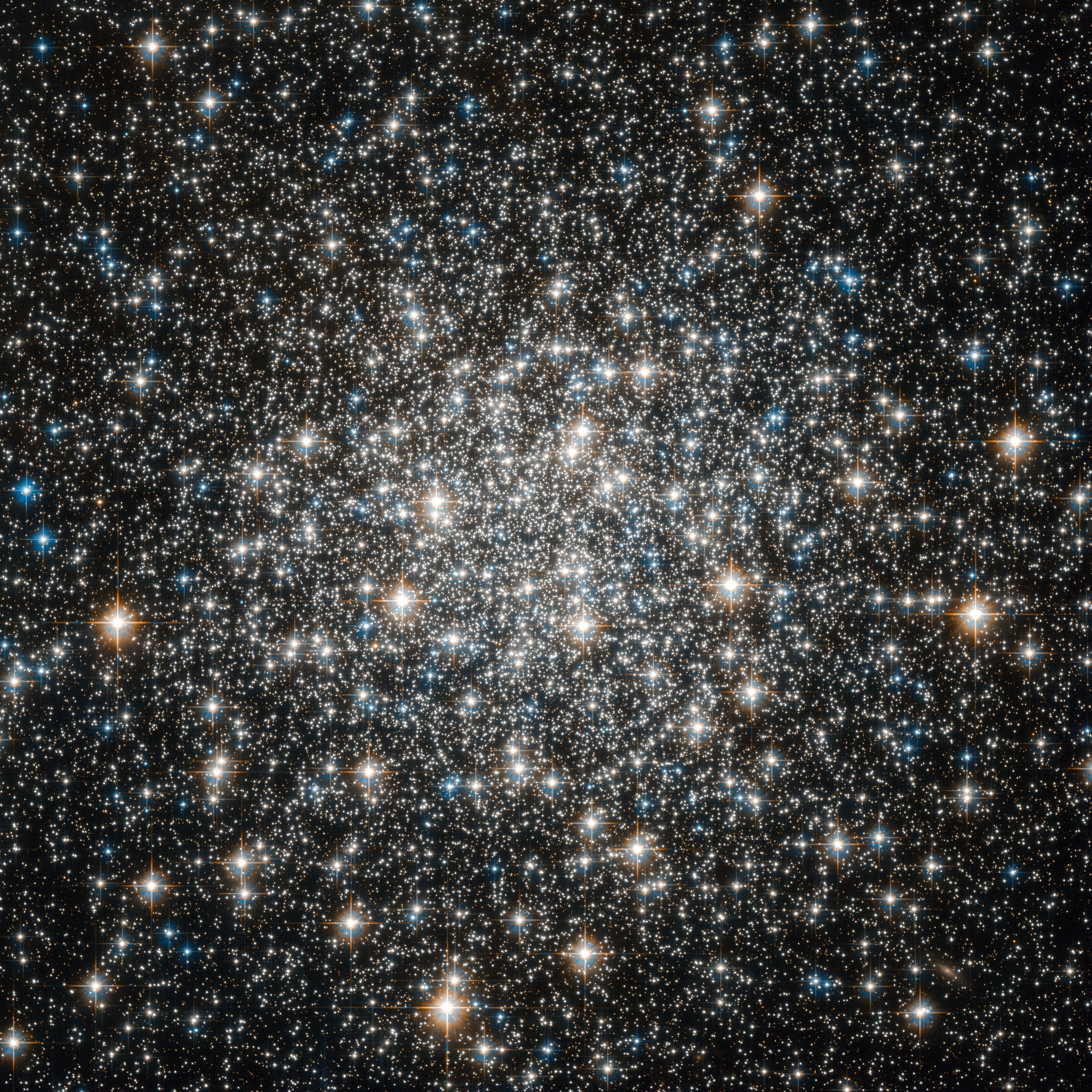
English: Like many of the most famous objects in the sky, globular cluster Messier 10 was of little interest to its discoverer: Charles Messier, the 18th century French astronomer, catalogued over 100 galaxies and clusters, but was primarily interested in comets. Through the telescopes available at the time, comets, nebulae, globular clusters and galaxies appeared just as faint, diffuse blobs and could easily be confused for one another.

Only by carefully observing their motion — or lack of it — were astronomers able to distinguish them: comets move slowly relative to the stars in the background, while other more distant astronomical objects do not move at all.

Messier’s decision to catalogue all the objects that he could find and that were not comets, was a pragmatic solution which would have a huge impact on astronomy. His catalogue of just over 100 objects includes many of the most famous objects in the night sky. Messier 10, seen here in an image from the NASA/ESA Hubble Space Telescope, is one of them. Messier described it in the very first edition of his catalogue, which was published in 1774 and included the first 45 objects he identified.

Messier 10 is a ball of stars that lies about 15 000 light-years from Earth, in the constellation of Ophiuchus (The Serpent Bearer). Approximately 80 light-years across, it should therefore appear about two thirds the size of the Moon in the night sky. However, its outer regions are extremely diffuse, and even the comparatively bright core is too dim to see with the naked eye.

Hubble, which has no problems seeing faint objects, has observed the brightest part of the centre of the cluster in this image, a region which is about 13 light-years across.

This image is made up of observations made in visible and infrared light using Hubble’s Advanced Camera for Surveys. The observations were carried out as part of a major Hubble survey of globular clusters in the Milky Way.

A version of this image was entered into the Hubble’s Hidden Treasures Image Processing Competition by contestant flashenthunder. Hidden Treasures is an initiative to invite astronomy enthusiasts to search the Hubble archive for stunning images that have never been seen by the general public. The competition has now closed and the results will be published soon.
Tarih 18 Haziran 2012
Kaynak http://www.spacetelescope.org/images/potw1225a/
Yazar ESA/Hubble & NASA

Lisanslama

w:tr:Creative Commons
atıf
Bu dosya, Creative Commons Atıf 3.0 Uluslararası lisansı ile lisanslanmıştır
Şu seçeneklerde özgürsünüz:
  • paylaşım – eser paylaşımı, dağıtımı ve iletimi
  • içeriği değiştirip uyarlama – eser adaptasyonu
Aşağıdaki koşullar geçerli olacaktır:
  • atıf – Esere yazar veya lisans sahibi tarafından belirtilen (ancak sizi ya da eseri kullanımınızı desteklediklerini ileri sürmeyecek bir) şekilde atıfta bulunmalısınız.
https://creativecommons.org/licenses/by/3.0CC BY 3.0 Creative Commons Attribution 3.0 truetrue

Altyazılar

Bu dosyanın temsil ettiği şeyin tek satırlık açıklamasını ekleyin.

Bu dosyada gösterilen öğeler

betimlenen

telif hakkı durumu

telif hakkı alınmış

telif hakkı lisansı

CC BY 3.0

kuruluşu

18 Haziran 2012

ortam türü

image/jpeg

Dosya geçmişi

Dosyanın herhangi bir zamandaki hâli için ilgili tarih/saat kısmına tıklayın.

Tarih/SaatKüçük resimBoyutlarKullanıcıYorum
güncel21.38, 18 Haziran 201221.38, 18 Haziran 2012 tarihindeki sürümün küçültülmüş hâli4.059 × 4.059 (13,26 MB)Fabian RRRRoriginal resolution
12.58, 18 Haziran 201212.58, 18 Haziran 2012 tarihindeki sürümün küçültülmüş hâli1.280 × 1.280 (824 KB)Jmencisom

Dosya kullanımı

Bu görüntü dosyasına bağlantısı olan sayfalar:

  • Küresel yıldız kümesi

Küresel dosya kullanımı

Aşağıdaki diğer vikiler bu dosyayı kullanmaktadır:

  • de.wikipedia.org üzerinde kullanımı
    • Messier 10
  • en.wikipedia.org üzerinde kullanımı
    • Globular cluster
    • Wikipedia:Featured picture candidates/February-2015
    • Wikipedia:Featured picture candidates/The Stellar Swarm
  • eo.wikipedia.org üzerinde kullanımı
    • M10
  • es.wikipedia.org üzerinde kullanımı
    • Cúmulo globular
  • ia.wikipedia.org üzerinde kullanımı
    • Messier 10
  • ja.wikipedia.org üzerinde kullanımı
    • へびつかい座
  • ko.wikipedia.org üzerinde kullanımı
    • 구상 성단
  • mk.wikipedia.org üzerinde kullanımı
    • Збиено ѕвездено јато
  • mr.wikipedia.org üzerinde kullanımı
    • गोलाकार तारकागुच्छ
  • nds.wikipedia.org üzerinde kullanımı
    • Messier 10
  • pl.wikipedia.org üzerinde kullanımı
    • Messier 10
  • uk.wikipedia.org üzerinde kullanımı
    • Кулясте скупчення
  • www.wikidata.org üzerinde kullanımı
    • Q11267
  • zh-yue.wikipedia.org üzerinde kullanımı
    • M10 (天體)
  • zh.wikipedia.org üzerinde kullanımı
    • 球狀星團

Üstveri

Bu dosyada, muhtemelen fotoğraf makinesi ya da tarayıcı tarafından eklenmiş ek bilgiler mevcuttur. Eğer dosyada sonradan değişiklik yapıldıysa, bazı bilgiler yeni değişikliğe göre eski kalmış olabilir.

Çevrimiçi telif hakkı bildirimi
KaynakESA/Hubble
Katkı/SağlayıcıESA/Hubble & NASA
Kullanım şartları
  • Creative Commons Attribution 3.0 Unported license
Resim başlığı
  • Like many of the most famous objects in the sky, globular cluster Messier 10 was of little interest to its discoverer: Charles Messier, the 18th century French astronomer, catalogued over 100 galaxies and clusters, but was primarily interested in comets. Through the telescopes available at the time, comets, nebulae, globular clusters and galaxies appeared just as faint, diffuse blobs and could easily be confused for one another. Only by carefully observing their motion— or lack of it — were astronomers able to distinguish them: comets move slowly relative to the stars in the background, while other more distant astronomical objects do not move at all. Messier’s decision to catalogue all the objects that he could find and that were not comets, was a pragmatic solution which would have a huge impact on astronomy. His catalogue of just over 100 objects includes many of the most famous objects in the night sky. Messier 10, seen here in an image from the NASA/ESA Hubble Space Telescope, is one of them. Messier described it in the very first edition of hiscatalogue, which was published in 1774 and included the first 45 objects he identified. Messier 10 is a ball of stars that lies about 15 000 light-years from Earth, in the constellation of Ophiuchus (The Serpent Bearer). Approximately 80 light-years across, it should therefore appear about two thirds the size of the Moon in the night sky. However, its outer regions are extremely diffuse, and even the comparatively bright core is too dim to see with the naked eye. Hubble, which has no problems seeing faint objects, has observed the brightest part of the centre of the cluster in this image, a region which is about 13 light-years across. This image is made up of observations made in visible and infrared light using Hubble’s Advanced Camera for Surveys. The observations were carried out as part of a major Hubble survey of globular clusters in the Milky Way. A version of this image was entered into the Hubble’s Hidden Treasures Image Processing Competition by contestant flashenthunder. Hidden Treasures is an initiative to invite astronomy enthusiasts to search the Hubble archive for stunning images that have never been seen by the general public. The competition has now closed andthe results will be published soon.
Kısa başlık
  • Globular Cluster M10
Verinin ilk yaratılma zamanı10.00, 18 Haziran 2012
Telif hakkı durumuTelif hakkı durumu belirtilmemiş
Anahtar kelimelerM 10
İletişim bilgileri

http://www.spacetelescope.org/

Karl-Schwarzschild-Strasse 2

Garching bei München, , D-85748 Germany

"https://tr.wikipedia.org/wiki/Dosya:Globular_Cluster_M10.jpg" sayfasından alınmıştır
  • Gizlilik politikası
  • Vikipedi hakkında
  • Sorumluluk reddi
  • Davranış Kuralları
  • Geliştiriciler
  • İstatistikler
  • Çerez politikası
  • Mobil görünüm
  • Wikimedia Foundation
  • Powered by MediaWiki
Dosya:Globular Cluster M10.jpg
Konu ekle